A developer has applied to rezone 206 E Annie St in Austin's Travis Heights neighborhood. Next to century-old single-family homes in a National Register Historic District, the proposal would replace a small church with a 64-unit apartment building.
We're neighbors who believe the proposal conflicts with the City's own plans, policies, and precedents.
Stay updated on this case
Sign up for updates and we'll let you know about public meetings, votes, and other opportunities to weigh in.
Smooth transitions
City policy requires density changes to be gradual. This proposal skips the transition entirely.
Both the City's comprehensive plan (Imagine Austin) and the neighborhood plan require infill development to fit the character of the neighborhood.
But this proposal doesn't come close to matching surrounding land uses: it asks the City to move up 7 zoning categories to MF-3. The developer can then take advantage of a bonus program called Affordability Unlocked to reduce or waive building standards for height, setbacks, area, and so on.
There's no such thing as a gradual transition from a 1930s bungalow to a four-story apartment building next door. But City staff have no problem recommending it because there's other MF-3 in the neighborhood. The recommendation ignores bonuses that remove compatibility standards that other MF-3 buildings are held to.
Are we just a bunch of NIMBYs?
We want to increase the housing supply in our neighborhood: smaller lot sizes, accessory dwelling units, "missing middle" multi-family homes, and yes, even apartments! There are great examples of compatible and high-density housing done right. But, it requires the City to prioritize the community over developer profits.
Growth should follow the plan
Austin planned to place density on corridors, not in the middle of neighborhoods.
Imagine Austin's plan designates corridors like South Congress Ave. for future density. Just being near a corridor isn't enough. The Rowen Vale site sits inside a residential block, surrounded on every side by existing single-family homes.
The City has previously held developers with stronger corridor justification to tighter standards than what is proposed here. Sixty-four units on 0.9 acres, in this location, would exceed anything previously approved in comparable circumstances.
City staff now say that Council-adopted plans mandate density within a quarter mile of corridors, failing to weigh how that development might change the neighborhood. With corridors less than half a mile apart in some areas, anything a developer might imagine is on the table.
“Why would the developer build something so disproportionate?”
The developer is seeking a tax credit that subsidizes roughly 70% of project costs. Investors claim these credits over 10 years, each year reducing their federal tax liability by approximately 9% of the affordable units' construction cost. The bigger they build, the more they stand to gain. (This is probably why there's a missing middle in housing.)
Our neighborhood is worth keeping
In a National Register Historic District, City policy requires compatibility, not just a review process.
Protecting historic character is directed by Imagine Austin, the neighborhood plan, and good citizenship.
The Rowen Vale site includes a contributing structure within a National Register Historic District. The applicant acknowledges Historic Landmark Commission review is required—but the City's policy demands more than process. It requires substantive compatibility with the historic character that the designation was created to protect.
The City staff's recommendation literally put a big red circle around the part of the neighborhood plan saying that adherence to design guidelines is voluntary. It highlights a bias: where's the red circle around the parts of the neighborhood plan and Imagine Austin that require compatibility with the established neighborhood?
“Is it really that bad?”
See for yourself: type your address to see how it would look next to your home.
A path forward
It's not a question of whether dense, affordable housing (and more of it!) belongs in Austin: it does. The goals of a compact and connected city are worth pursuing.
But there are better options for this site. Under the City's current HOME Amendment rules, the current SF-3 zoning would support roughly 18 multi-family homes on the site. Upzoned to SF-5, that number could grow further. That's something our entire community would rally behind.
Housing advocates call this the missing middle: housing that falls between single family homes and large apartment complexes. Austin Mayor Kirk Watson observed in April 2026, "it's "missing" middle because we don't have enough of these developments."
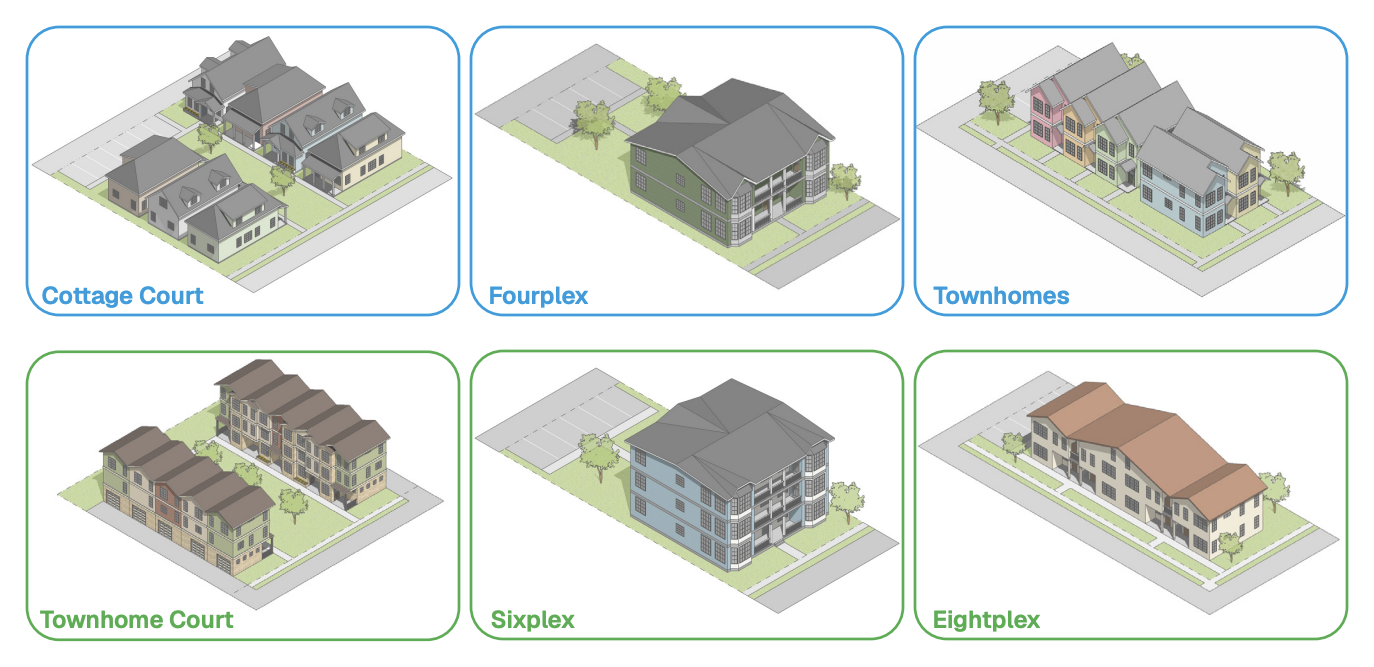
While we think this site is best suited for "missing middle" development, we understand a primary reason City staff recommends MF-3 is other instances of the same zoning nearby. We could also envision real MF-3 at this site: no bending the rules with waivers. Our community would endorse MF-3 with a conditional overlay mandating the site be held to current MF-3 standards.